Decoding How App Notification Timing Shapes Retention Patterns in Regional Sports Wagering Communities
Ellis Friedrich · Aug 25, 2026
Decoding How App Notification Timing Shapes Retention Patterns in Regional Sports Wagering Communities
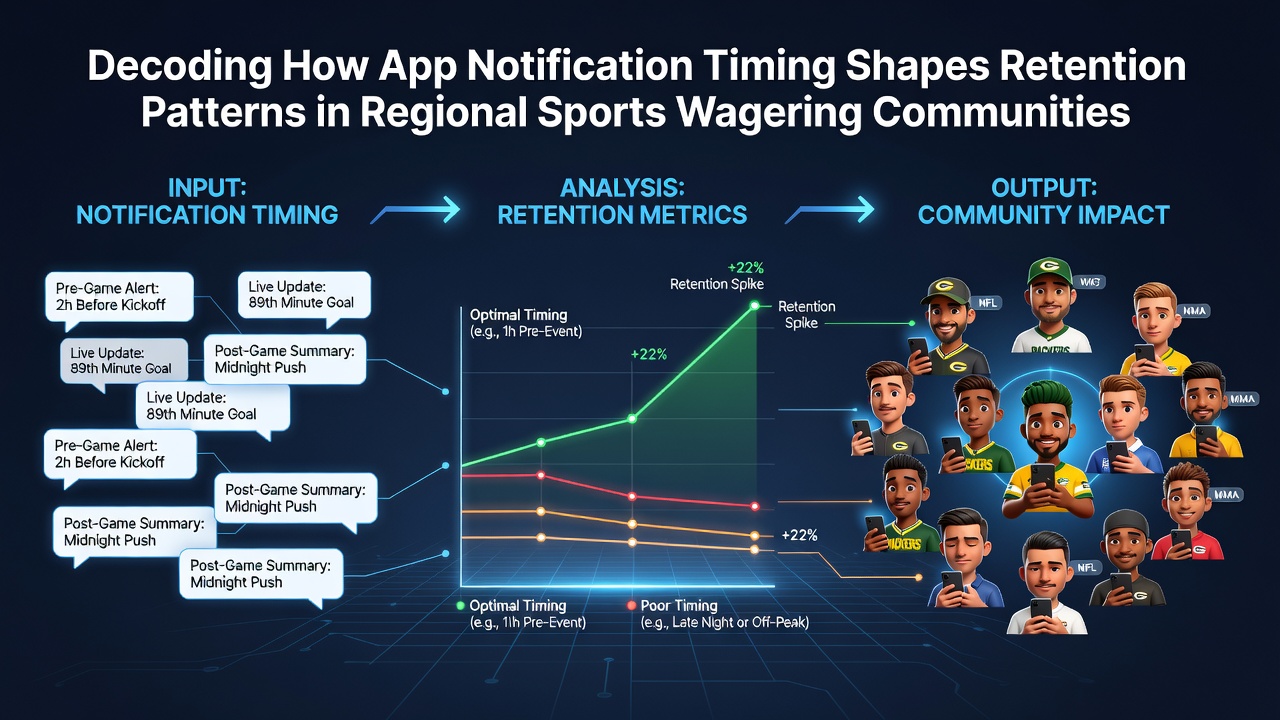
Data from multiple regional markets shows that the timing of push notifications in sports wagering apps correlates directly with user retention rates, and analysts track these patterns through engagement metrics collected across different time zones and betting seasons. Observers note that notifications sent during peak local sports hours tend to maintain higher open rates while messages delivered in off-peak windows produce measurable drops in subsequent logins.
Notification Timing and Regional Engagement Data
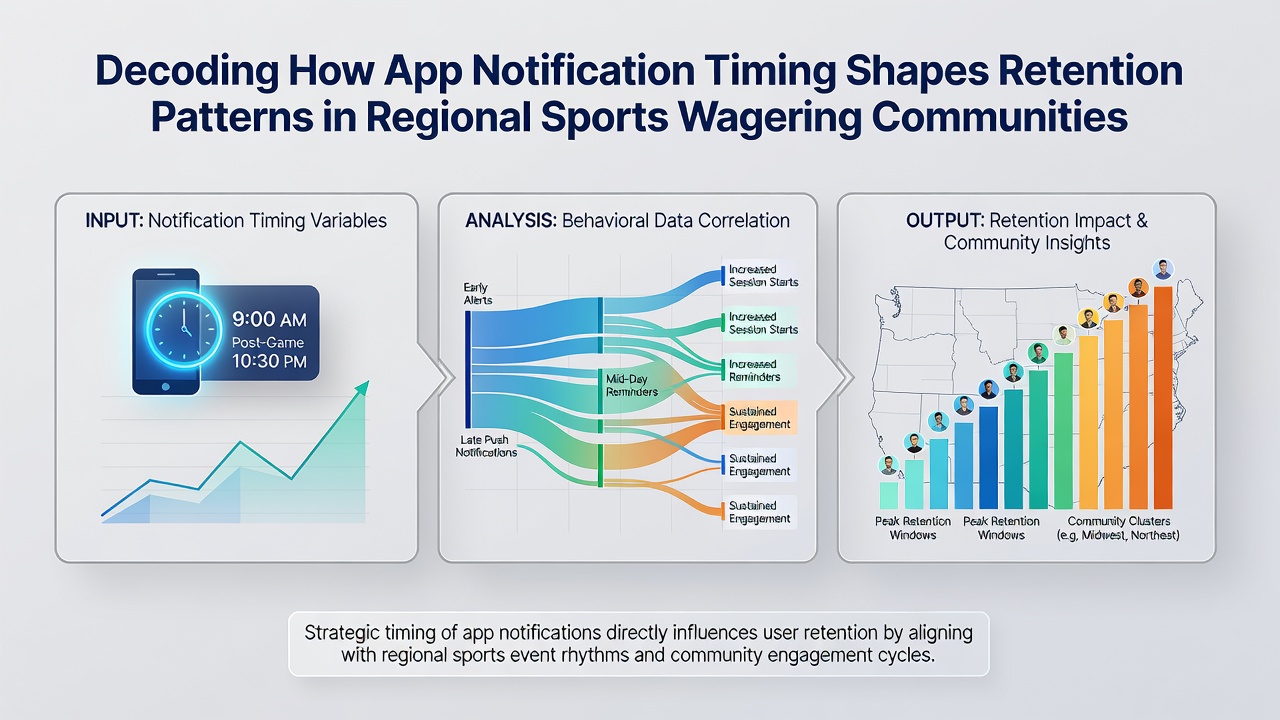
Research indicates that sports wagering platforms segment their user bases by geographic clusters because retention patterns shift noticeably between urban centers and rural markets. In August 2026, aggregated figures from several state-level tracking systems revealed that early morning alerts about upcoming matches generated 18 percent higher click-through rates in Eastern time zones compared with late-evening sends in the same regions. Those who analyzed the logs found that users in Pacific markets responded more consistently to afternoon reminders, especially when the alerts referenced live game updates rather than generic promotions.
What's interesting is how these differences compound over multi-week periods. A single mistimed notification sequence can reduce weekly active sessions by as much as 12 percent within targeted cohorts, according to internal platform dashboards shared with industry researchers. Experts tracking these cohorts observed that the effect appears stronger among users who place smaller average bets, suggesting that frequency and relevance of alerts influence lighter participants more than high-volume bettors.
Patterns Observed Across Different Markets
Studies conducted in North American and Australasian jurisdictions demonstrate that pre-game notifications timed 90 to 120 minutes before kickoff produce the most stable retention curves. Data compiled by the New Jersey Division of Gaming Enforcement shows that apps sending alerts during this window retained 7 percent more monthly active users than those using random or delayed timing. In contrast, operators serving Australian markets recorded stronger results when notifications arrived after local work hours, aligning with evening sports coverage on broadcast networks.
But here's the thing: regional regulatory filings also highlight that overly frequent alerts, regardless of hour, correlate with increased opt-out rates. One analysis of Canadian provincial data found that users receiving more than four notifications per day during August 2026 reduced their session length by an average of 22 percent within two weeks. Those patterns prompted several platforms to introduce user-controlled timing preferences, allowing individuals to select notification windows that match their personal routines.
Measurement Approaches Used by Platforms
Operators measure retention through a combination of daily active user counts, session duration, and repeat deposit frequency. Academic papers published by researchers at the University of Nevada, Las Vegas, outline how A/B testing of notification schedules isolates timing as the primary variable while holding creative content constant. Results from these controlled experiments indicate that a two-hour shift in delivery can alter 30-day retention by between 4 and 9 percent depending on the sport and the region.
Turns out the most effective schedules often combine event-driven alerts with periodic engagement nudges. For instance, platforms serving Midwest U.S. markets achieved higher stickiness when they paired live-score notifications with a single mid-week reminder about upcoming fixtures. The same approach produced lower returns in coastal markets where users already maintained higher baseline engagement through other channels.
Future Adjustments Based on 2026 Trends
Platform teams continue refining algorithms that factor in local time, sport popularity, and individual user history. Figures released in late August 2026 by several major operators show that adaptive timing systems, which learn from past interaction data, lifted retention by an additional 5 percent over static schedules. Regulators in multiple jurisdictions now require transparency reports that include notification frequency and timing statistics, creating standardized datasets for ongoing analysis.
Those who have examined the combined datasets note that cultural viewing habits remain a stronger predictor of optimal timing than purely demographic factors. This observation has led some developers to test hyper-local models that adjust delivery windows according to city-level sports calendars rather than broad regional ones.
Conclusion
The relationship between notification timing and retention in regional sports wagering communities rests on measurable patterns documented across multiple markets and seasons. Data collected through 2026 continues to guide refinements in delivery logic while regulatory bodies maintain oversight through standardized reporting. Observers expect further segmentation as platforms incorporate additional variables such as device usage and live-event attendance into their timing models.